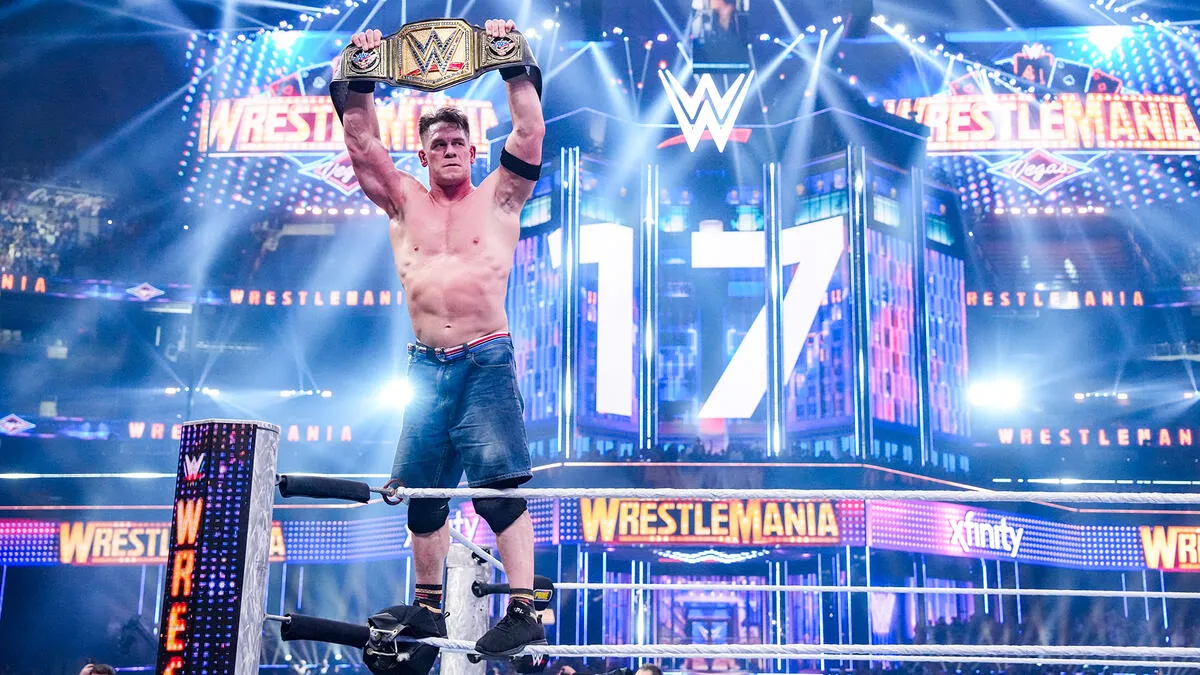
John Cena’s heel turn at the Extreme Rules Premium Live Event pulled many lapsed fans back into WWE, myself included.
When it came to the “Face That Runs the Place”, I was the pause in between the “Let’s Go Cena! Cena Sucks!” chants. His theme song always put a smile on my face whenever it dropped. I loved his energy. I appreciated what he stood for. Hell, I was firmly in his corner during SummerSlam 2010, despite what his actions eventually did to the whole Nexus angle (a storyline involving a group of rookies that many, including myself in retrospect, felt was mishandled).
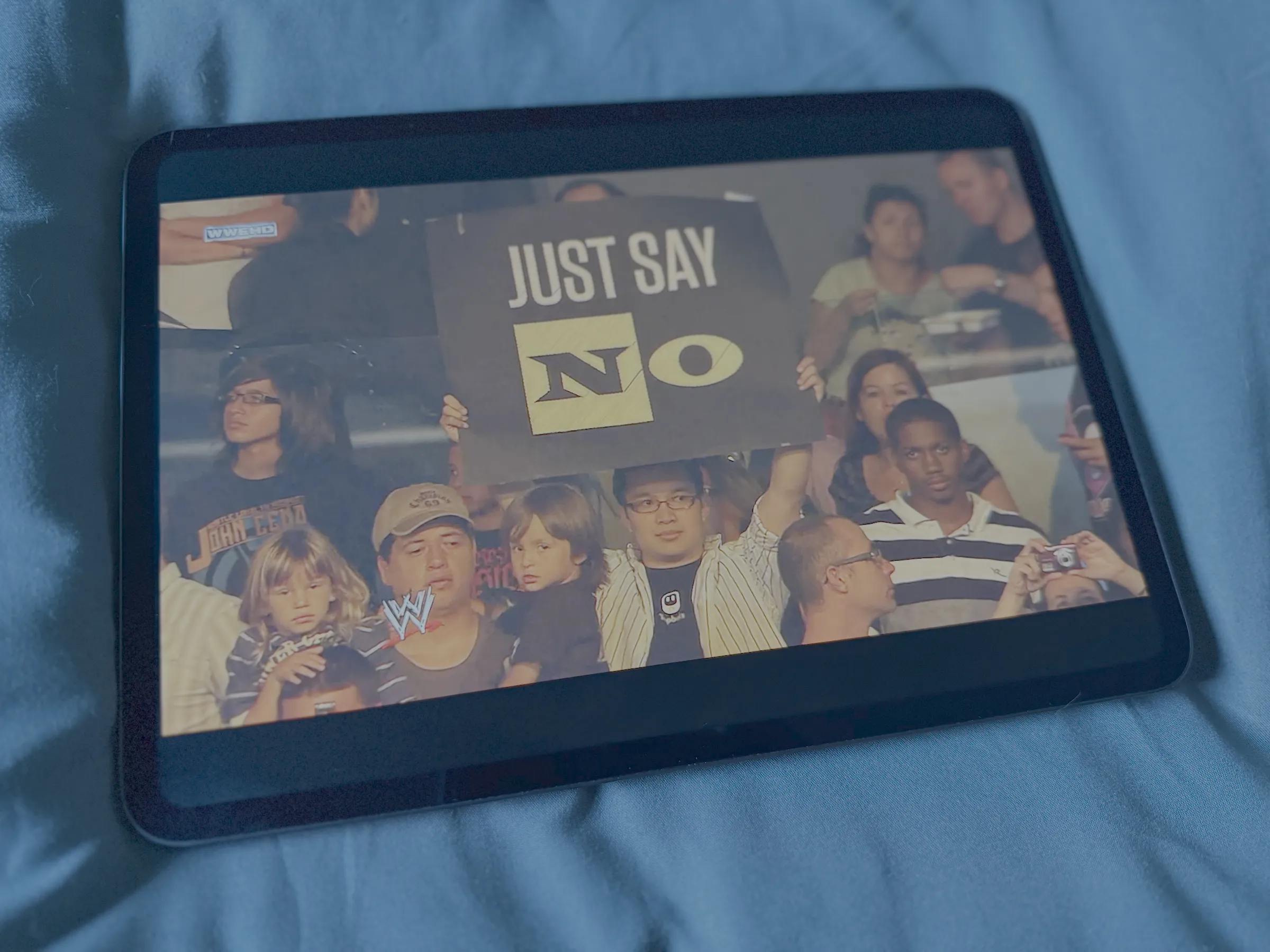
When Jen—who is not a wrestling fan—told me how her Twitter feed was filled with the shock of this once-in-a-lifetime event, I immediately needed to do my research. How did we get here? What’s this Final Boss thing? I consumed every related piece of media on WWE’s official YouTube channel. I caught up with every PLE that I had missed, falling in love with Cody Rhodes’ story in the process—but that’s a story for another time. The rabbit hole of WWE content was a welcome distraction to what was going on in my life at the time.
The Titantron
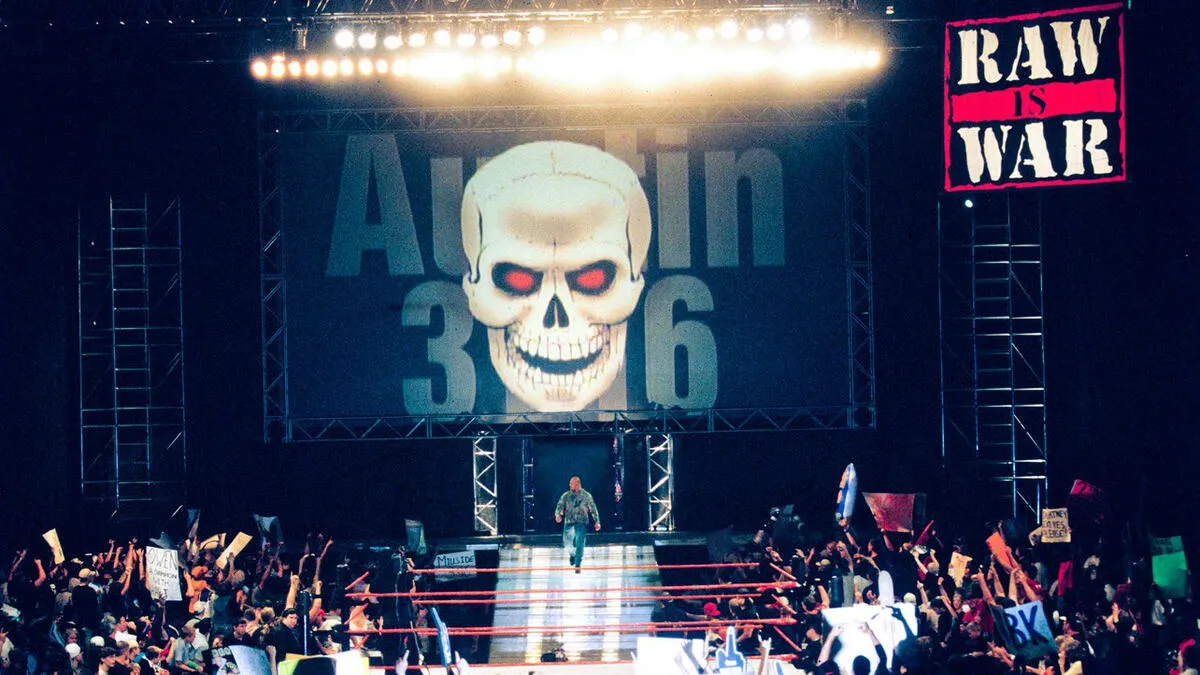
Being who I am, the Titantron, or the large LED screen that would display the wrestler’s entrance video that became a mainstay of the promotion since the Attitude Era, has always been a subject of interest for me.
In conjunction with the talent’s look, and their entrance music, the video package represented a cornerstone of their brand. As time went on, stage would evolve into a myriad of LED displays. The Titantron became a small part of a greater whole and would continue to do so until the promotion stopped using looping video packages altogether, the main focus being on bespoke graphic packages using the talent’s brand assets. From a design standpoint, it allowed the stages to be a lot more dynamic, no longer having the restriction of a large 16:9 video screen.
No matter the iteration of the stage, the visuals added a degree of volume to the entrances. They were loud. They were flashy. They told a story in and of themselves: from lightning strikes illuminating a cemetery for the Undertaker, to a montage of the masks worn by Rey Mysterio, to the flashes of “BEST IN THE WORLD” for CM Punk.
The Heel that Runs the Place
And then there are John Cena’s entrances.
All the stops were pulled out for John’s final year as a wrestler after he announced his retirement at the Money In The Bank PLE in 2024. With the part timer’s final schedule set, the promotion created bespoke items for each stop on his retirement tour adorned with the words “The Last Time Is Now”, a play on his well-known theme “The Time Is Now”, with that treatment extending to his entrance graphics.
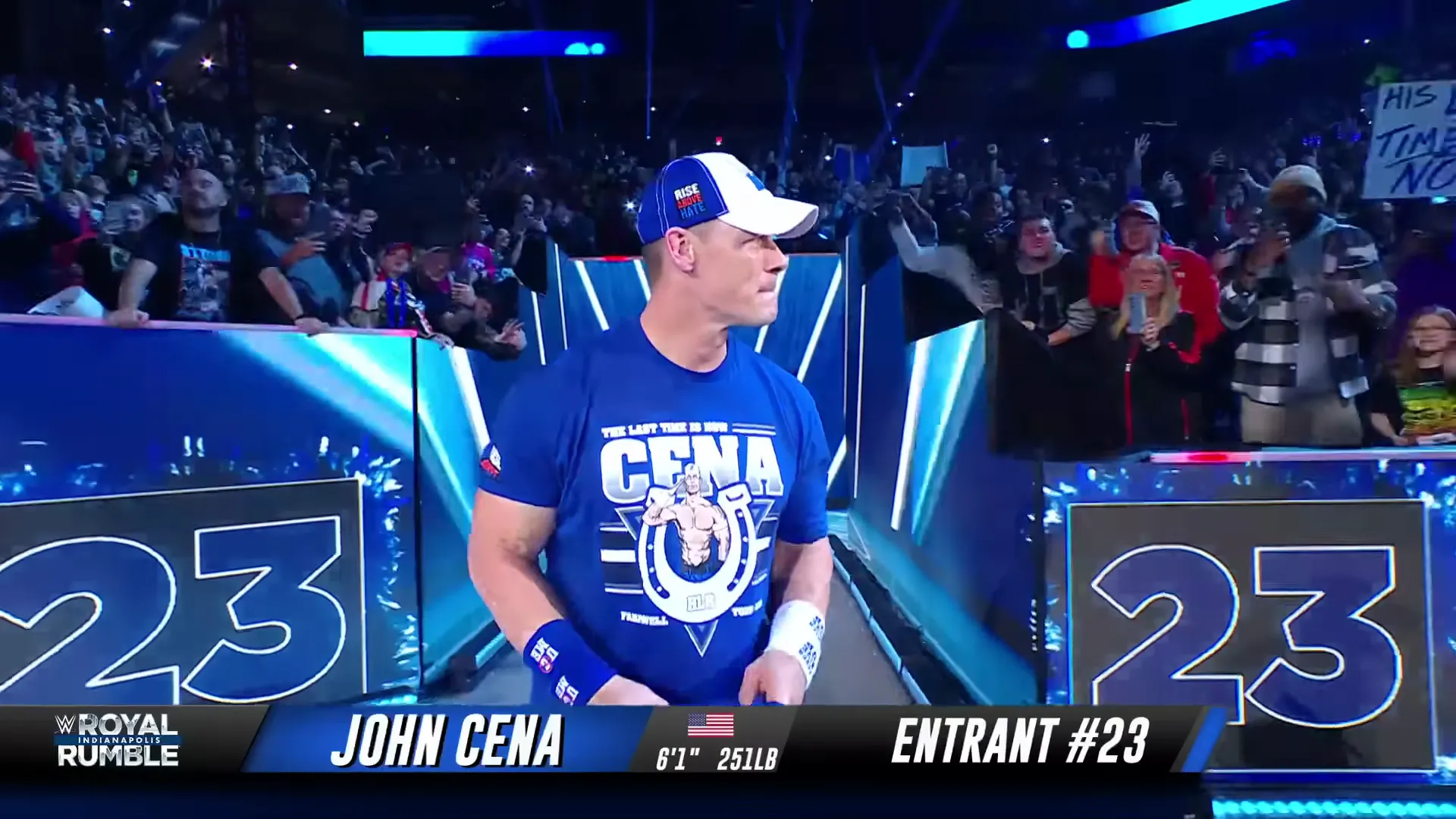
Then the heel turn happened. His smile faded. His sprint out to the ring turned into a slow walk. His body language became the anthesis of what we had seen since his debut in 2002, even during his last heel run as the “Doctor of Thuganomics.” And in one of his first turns on the mic, which I was now witnessing live as I was properly hooked, he proclaimed that he wanted to “ruin wrestling.”
In a crazy series of events that followed my meteoric descent back into the wrestling fandom, I took the chance to head to what would be my first and Cena’s final WrestleMania. Worth noting: I had the time of my life, attributed to the fact that not only was history taking place, and the energy more palpable than my last live event 15 years prior, but Jen was there with me this time and was able to get into it.
The Entrance
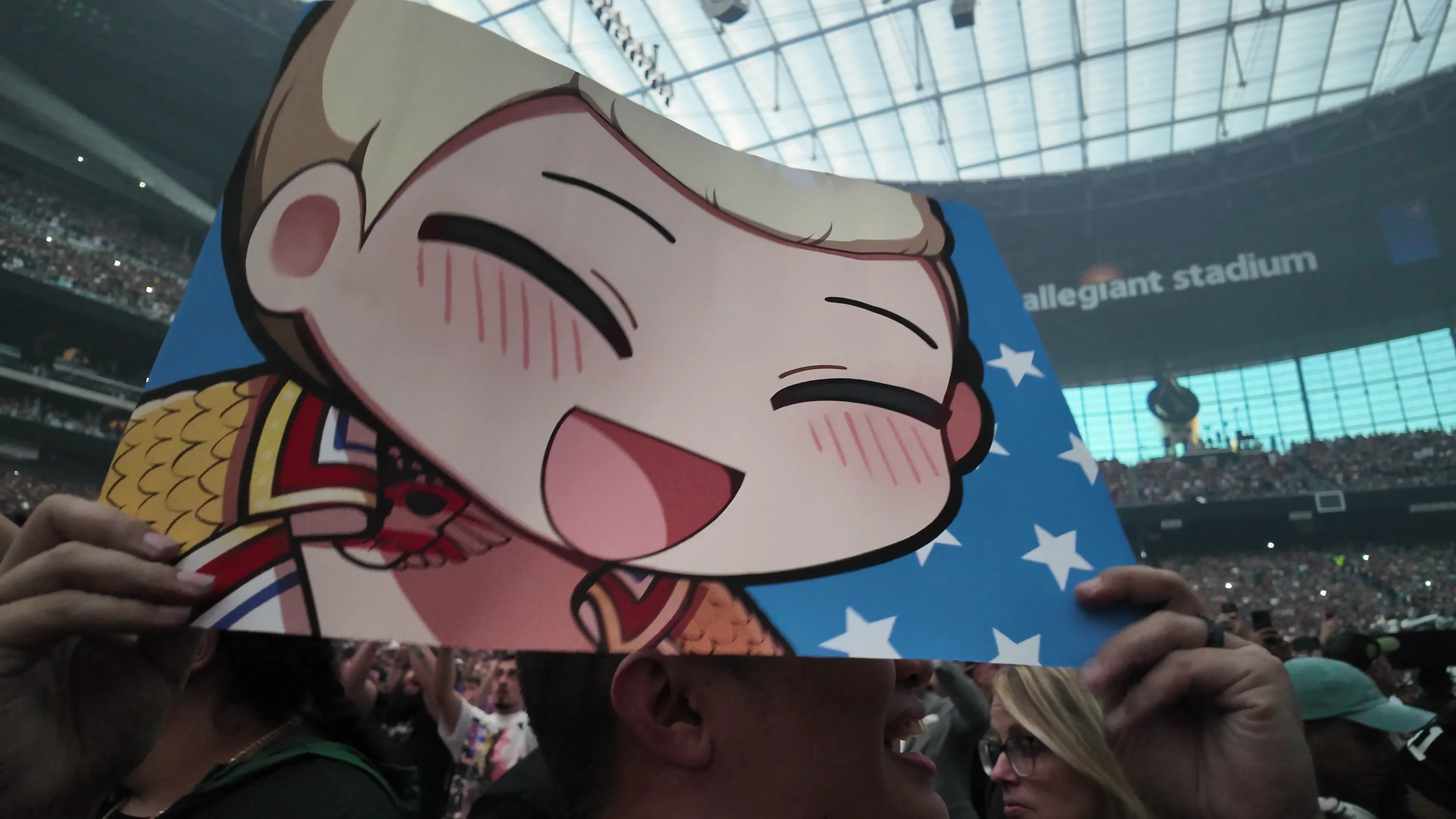
Cena’s match versus Cody Rhodes was the main event and the final match of the event. I had given Jen my camera so I could hold up a sign I had made to cheer Cody on. The entirety of Allegiance Stadium was staring at WrestleMania 41’s stage, which looked to pay homage to The Bellagio.
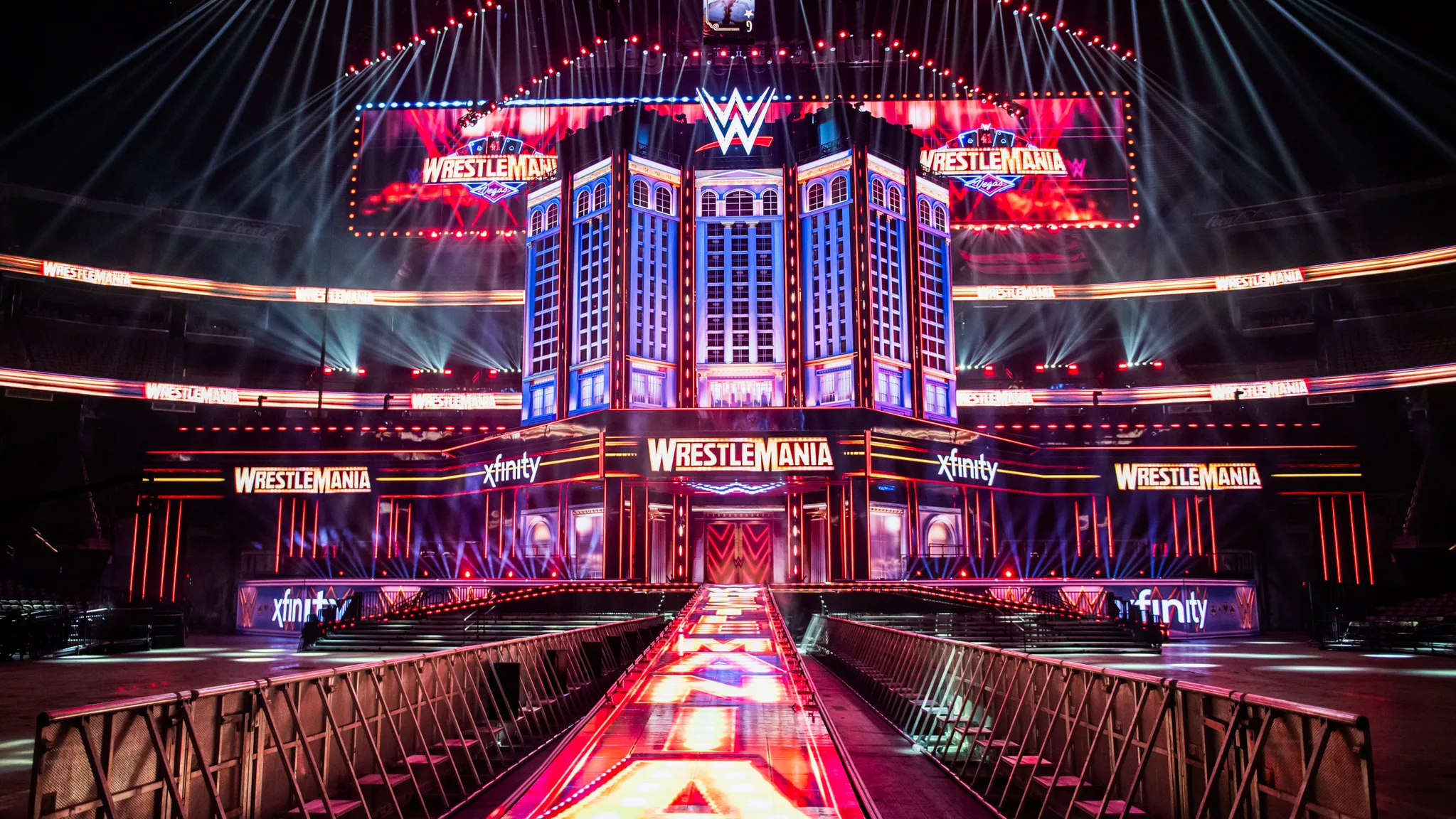
The lights went out and “The Time is Now” kicked in. The expectation of some commemorative Vegas-themed graphics package? This is WrestleMania. This is where the big entrances happen. I mean, here was a man who had the gamut of awesome entrances from driving a Mustang through the streets of Detroit and into pane of glass, to hiring 40 or so extras waving their hands in their faces because you couldn’t see them.
But none of the LED screens lit up. The aforementioned expectations were dashed as a solitary “JOHN CENA”, set in an extra bold sans-serif, was all that appeared. In one of the smartest branding moves I had ever seen, John had killed the wrestling entrance. I was enthralled. It was perfect.
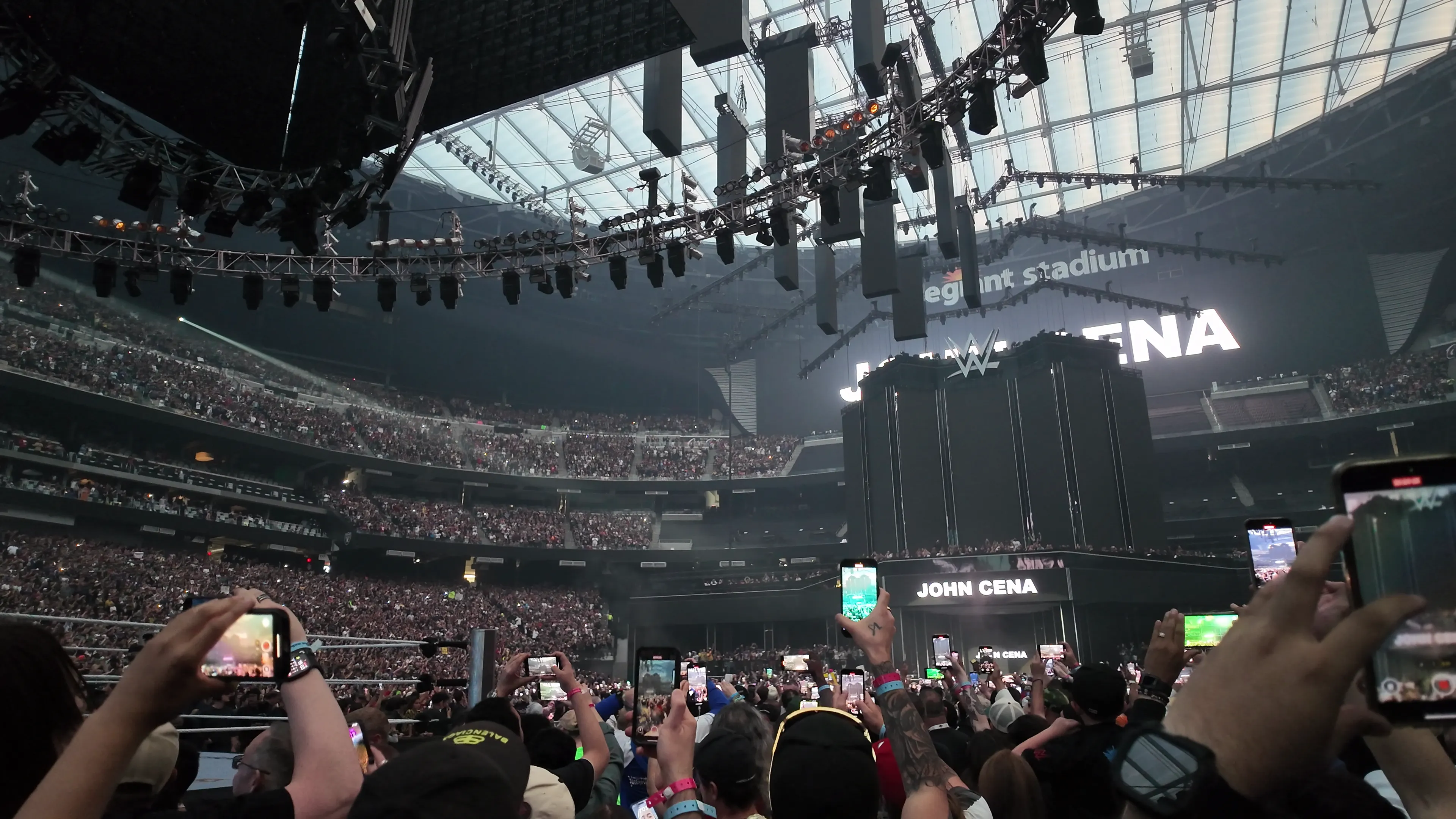
Think what you will of the match that followed—you can’t exactly have a stellar match and “destroy wrestling” at the same time—but that entrance will stick in this designer’s mind as one of the best uses of medium in the history of wrestling. John Cena, in his final WrestleMania match, stuck to the bit—and through the absence of spectacle, solidified that moment for all time.
John Cena’s heel turn, while only in its third month, has been a pleasure to watch as a long-time fan—even for someone who’s been in and out of the fandom like I have. His promos have carried a hard-hitting reality that, as someone who remains “in the middle,” has had me nodding along during many segments. It’s the type of storyline that can only happen after a quarter century in the business, and a storyline only John can tell. I’m sure he’ll continue to “destroy wrestling” in ways only he can, and honestly, I’m here for the entire ride.